

Your Alexa just got a face, a personality, and a $800 price tag. Holographic home assistants are stepping out of science fiction labs and into American living rooms, promising to replace the static smart speakers that have dominated our homes for the past decade.
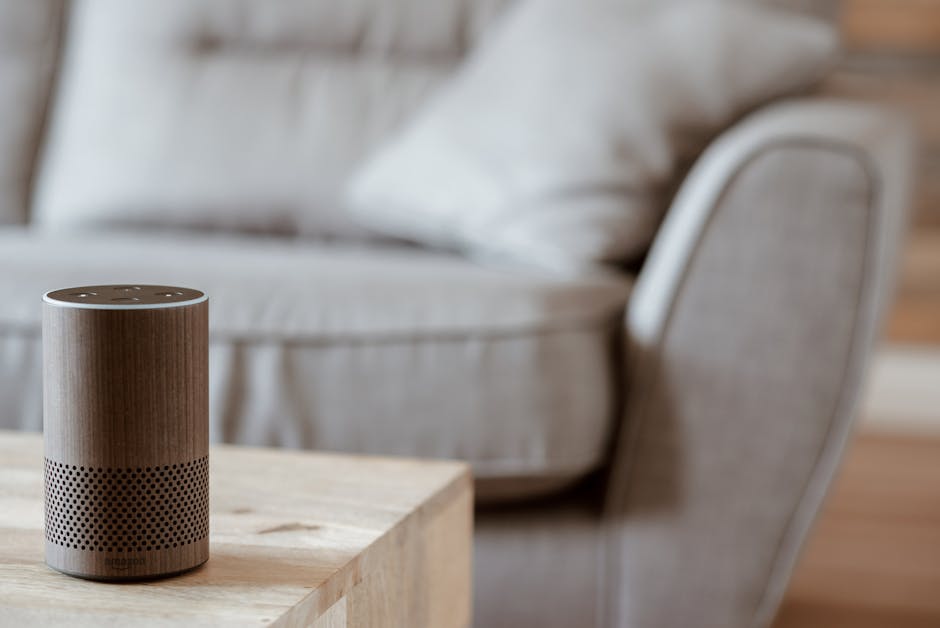
Unlike the familiar cylindrical speakers from Amazon and Google, these new AI companions project three-dimensional avatars that can gesture, make eye contact, and react to your mood. They’re not just answering questions about the weather—they’re becoming digital family members with distinct personalities, memories of your conversations, and the ability to learn your daily routines down to how you like your coffee.
The Technology Behind the Magic
The breakthrough comes from advances in volumetric display technology, where companies like Looking Glass Factory and Voxon have miniaturized holographic projectors to fit inside devices roughly the size of a toaster. These systems use thousands of micro-LEDs arranged in precise arrays to create floating images visible from multiple angles without special glasses.
Leading the charge is Anthropic’s Claude Home, which launched in beta testing this fall at $799. The device projects a customizable avatar—anything from a friendly robot to a photorealistic human assistant—that stands about 8 inches tall and can move naturally within a defined space above the unit.
Key Features That Set Them Apart
The holographic assistants offer capabilities impossible with traditional smart speakers:
- Visual communication: Hand gestures, facial expressions, and body language make interactions feel more natural than voice-only exchanges
- Spatial awareness: Built-in depth cameras track where you are in the room and adjust the avatar’s gaze accordingly
- Emotional intelligence: Advanced AI models analyze your tone, posture, and facial expressions to respond appropriately to your mood
- Persistent memory: Unlike current smart speakers that reset each conversation, these devices remember context across days and weeks
Google’s Project Mira, expected to launch in spring 2026 at $849, takes a different approach with interchangeable personality modules. Users can switch between a professional assistant for work calls, an enthusiastic fitness coach for workouts, or a calming presence for meditation sessions.
Real-World Performance and User Experience
Beta testers report a fundamental shift in how they interact with their AI assistants. Sarah Chen, a San Francisco marketing director testing Claude Home, describes the experience: “It’s like having a helpful roommate who’s always available but never intrusive. The avatar notices when I’m stressed and offers to dim the lights or play calming music without me asking.”
The visual element proves especially valuable for complex tasks. When asking for cooking instructions, the holographic assistant can demonstrate techniques with hand gestures. For home automation, it points toward the devices it’s controlling, making it clear which lights or appliances are responding to voice commands.
Performance Limitations
Current models aren’t perfect. The holographic projections work best in controlled lighting—too much sunlight washes out the image, while complete darkness makes the projection appear ghostly and unsettling. Voice recognition accuracy matches current smart speakers at around 95%, but the added visual processing sometimes causes 2-3 second delays in responses.
Battery life remains a significant challenge. Most units require constant power, though Samsung’s upcoming Galaxy Assistant Pro promises 4-6 hours of portable operation when unplugged—enough for outdoor entertaining or moving between rooms.
Privacy Concerns and Data Collection
The always-on cameras required for spatial awareness and emotional recognition raise new privacy questions. These devices collect significantly more personal data than traditional smart speakers, including detailed information about your daily routines, emotional states, and physical appearance.
Most manufacturers offer privacy modes that disable visual monitoring, reverting to voice-only interaction. However, this eliminates many of the compelling features that justify the premium price. Apple’s rumored HomePod Vision, slated for late 2026, promises on-device processing for visual data, never sending images to cloud servers.
Setting Boundaries
Early adopters recommend establishing clear household rules about when the assistant should and shouldn’t be actively monitoring. Popular approaches include:
- Automatic privacy mode during meal times and family conversations
- Visual monitoring only in common areas, not bedrooms or bathrooms
- Regular review of stored data and deletion of sensitive interactions
- Guest modes that disable learning features when visitors are present
Market Impact and Competition
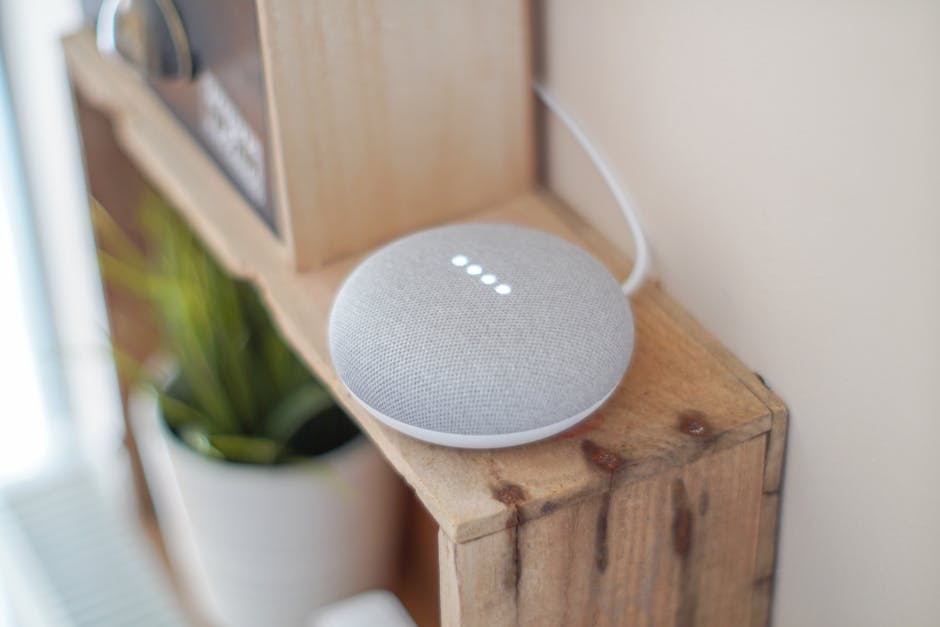
Amazon faces its first serious challenge to smart speaker dominance since Echo launched in 2014. The company’s response, reportedly codenamed “Alexa 3D,” remains under development but insiders suggest a focus on affordability over advanced holographic quality.
Meta’s Llama Home Assistant, priced at $699, targets younger demographics with gaming-inspired avatars and social features. Users can connect their devices for multi-household conversations, turning AI assistants into a social network of sorts.
The premium pricing puts these devices out of reach for many consumers initially, but analysts predict rapid price drops as production scales. Goldman Sachs estimates holographic assistants will reach $400-500 by late 2027, putting them within range of higher-end smart speakers.
Practical Buying Advice
If you’re considering making the jump, timing matters. First-generation devices launching in early 2026 will likely have software limitations and shorter lifespans as the technology rapidly evolves.
Wait for second-generation models arriving in fall 2026 unless you’re genuinely excited about beta testing new technology. These updated versions should address current limitations around battery life, lighting sensitivity, and response delays.
For households with children, consider the psychological impact of anthropomorphic AI companions. While many kids adapt quickly, some parents report concerns about children forming emotional attachments to artificial beings or struggling to distinguish between human and AI relationships.
The Bottom Line
Holographic home assistants represent the next evolution in human-computer interaction, but they’re not yet ready to completely replace traditional smart speakers for most households. The technology is impressive, the user experience genuinely novel, and the potential enormous—but current limitations and high prices make them luxury items rather than essential upgrades.
If you’re comfortable being an early adopter and have $800 to spend on cutting-edge technology, these devices offer a glimpse into the future of AI companionship. For everyone else, wait another year or two for the technology to mature and prices to drop. The holographic revolution is coming to living rooms everywhere—it just doesn’t need to arrive at yours quite yet.