

Jennifer Egan didn’t write her latest novel alone. The Pulitzer Prize winner used AI to generate dialogue patterns for three of her characters, feeding the system her previous work to maintain voice consistency. She’s not alone—by 2026, nearly 40% of published fiction will involve AI assistance in some capacity, from plot development to character creation.
The publishing industry is witnessing something unprecedented: human creativity amplified by machine intelligence. But this isn’t the dystopian takeover many predicted. Instead, it’s a nuanced collaboration that’s reshaping how stories get told, who gets to tell them, and what readers expect from their books.

The New Creative Partnerships
Andy Weir, author of “The Martian,” now uses AI to research technical details for his hard science fiction. His latest novel, due in spring 2026, required understanding quantum computing principles. Instead of spending months consulting physicists, he trained a custom AI model on peer-reviewed quantum research papers. The result: accurate scientific details delivered in weeks, not months.
Margaret Atwood’s MaddAddam Press has embraced AI for what she calls “structural scaffolding.” Writers submit story concepts to an AI system that generates multiple plot outlines, character relationship maps, and potential conflict scenarios. Authors then select and modify these elements as starting points. The press reports a 60% increase in manuscript quality and a 30% reduction in revision cycles since implementing the system in late 2025.
But the most significant shift isn’t happening with established authors—it’s democratizing storytelling for newcomers. Kenji Nakamura, a Tokyo software engineer, published three bestselling novels in 2025 using AI to overcome his self-described “dialogue deficiency.” His AI assistant, trained on contemporary Japanese and English literature, helps him craft realistic conversations while he focuses on plot and character development.
The Technical Reality
Today’s AI writing tools have evolved far beyond the clunky chatbots of 2023. Claude-4 Creative and GPT-5 Author integrate with writing software like Scrivener and Notion, offering real-time suggestions without disrupting workflow. These systems cost between $50-200 monthly for professional versions, putting sophisticated assistance within reach of serious writers.
The technology excels at specific tasks: generating multiple character voice options, creating detailed world-building documents, and identifying plot inconsistencies across long manuscripts. Sarah Chen, whose AI-assisted fantasy trilogy topped Amazon charts in 2025, describes her process: “I write the emotional core—the human struggles, the relationships. AI handles the mechanical worldbuilding, the magic system logistics, the secondary character personalities. Together, we create something neither could achieve alone.”
What Human Writers Still Own
Despite AI’s capabilities, certain elements remain distinctly human. Emotional authenticity—the raw experience that connects readers to characters—still requires lived experience. AI can simulate grief, but it cannot understand the weight of loss. It can describe love, but not the vulnerability of opening yourself to another person.
Colson Whitehead, two-time Pulitzer winner, experimented with AI for his 2026 historical novel about 1960s Detroit. The AI generated period-accurate details about cars, music, and local businesses. But the protagonist’s internal struggle with racial identity? “That came from my chest, not from a machine,” Whitehead explains. “AI gave me the stage, but I had to perform the play.”
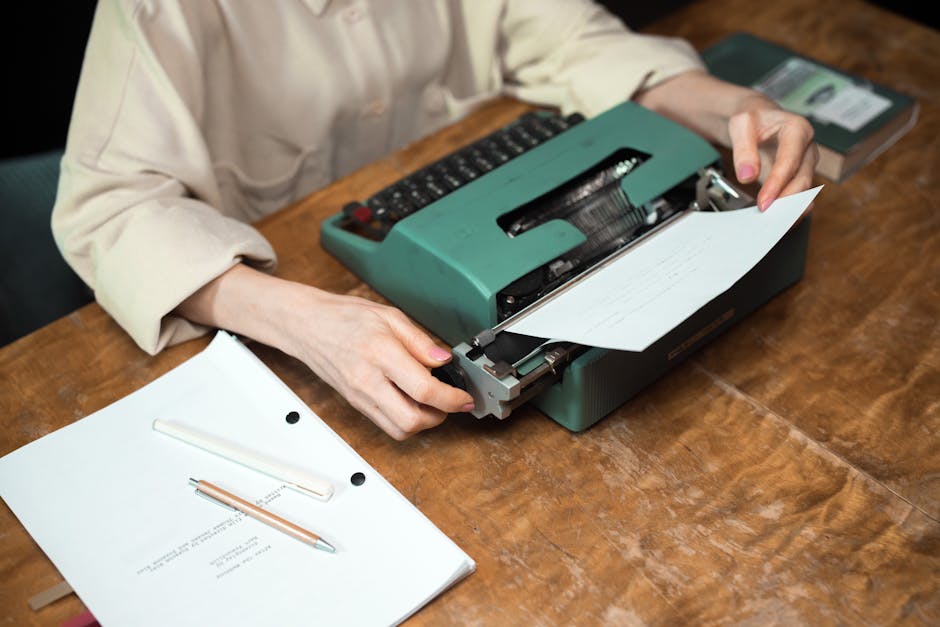
Publishers are noticing distinct patterns in human-AI collaborations. Books written entirely by AI lack what Random House editor Lisa Watanabe calls “emotional stickiness”—the ability to create lasting impact on readers. Meanwhile, books that blend human insight with AI assistance often show improved pacing and more consistent world-building than purely human efforts.
The Economics of Enhanced Creativity
The financial implications are reshaping publishing economics. Authors using AI assistance report writing 2-3 times faster than traditional methods. This speed increase allows for more frequent releases, building stronger reader relationships and increasing lifetime value per fan.
Indie author collective The Hybrid Writers, formed in early 2025, shares AI costs and techniques among 200+ members. Their average annual income increased 180% after implementing AI assistance tools. Members write faster, publish more consistently, and spend more time on marketing and reader engagement—areas where human connection remains irreplaceable.
Traditional publishers are adapting their contracts to address AI use. Penguin Random House now includes AI disclosure requirements, while independent presses like Tachyon Publications actively seek AI-assisted manuscripts, viewing them as a competitive advantage in rapidly changing markets.
The Reader Response
Contrary to industry fears, readers aren’t rejecting AI-assisted books. A 2025 survey by BookScan found that 73% of readers don’t care about AI involvement if the story engages them. However, transparency matters—books that clearly disclose AI assistance score higher in reader satisfaction than those that hide it.
The most successful AI-assisted authors frame their tools as enhancement, not replacement. Brandon Sanderson’s 2025 blog post about using AI for his Stormlight Archive series received overwhelming positive response. He detailed how AI helped maintain consistency across his complex magic systems while he focused on character development and emotional arcs.
Bookstores are adapting too. Powell’s Books in Portland created an “Enhanced Fiction” section in October 2025, featuring AI-assisted works alongside traditional books. Sales data shows these sections perform 20% better than standard fiction displays, suggesting readers are curious rather than resistant.
Genre-Specific Applications
Different genres benefit from AI in distinct ways. Science fiction writers use AI for technical accuracy and future extrapolation. Romance authors employ AI to generate meet-cute scenarios and relationship tension beats. Mystery writers leverage AI for red herring development and clue placement consistency.
Literary fiction shows the most interesting split. Authors like Sally Rooney continue writing entirely by hand, while others embrace AI for research and structural support. The key difference: literary fiction’s success depends heavily on unique voice and perspective—areas where AI augments rather than replaces human insight.
Looking Forward
By 2026, the question isn’t whether AI will replace human writers—it’s how the best writers will use AI to amplify their unique human perspectives. The most successful authors understand AI as a sophisticated tool, like spell-check or grammar software, but for creativity itself.
The writers thriving in this new landscape share common approaches: they maintain clear boundaries between human and AI contributions, they’re transparent with readers about their process, and they view AI as enhancement rather than replacement. They understand that readers connect with human experience, but they’re not afraid to use technology to deliver that experience more effectively.
Human writers aren’t becoming obsolete—they’re becoming enhanced. The authors who embrace this reality while preserving what makes them uniquely human will define literature’s next chapter. Those who resist may find themselves not replaced by AI, but by human writers who learned to dance with it.