




The Weight of a World Cup on One Pair of Shoulders
Christian Pulisic is preparing for the largest sporting event on earth, and his attitude toward it could not be more disarming: it’s just another big tournament.
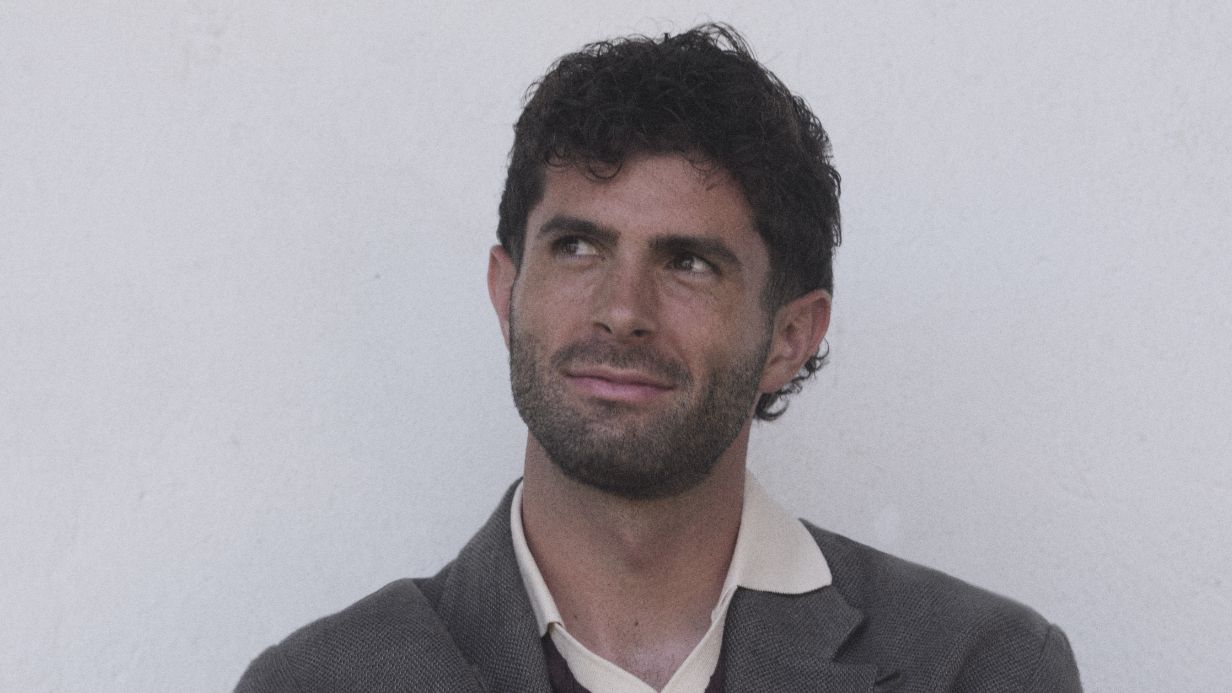
Coming Back From the Worst Stretch of His Career
There is something quietly striking about the way Pulisic carries himself into the 2026 World Cup cycle. The US men’s national team is set to cohost the tournament – the full weight of a home crowd, a host nation’s expectation, and years of accumulated national soccer ambition pressing down on a single roster. And its most recognizable player has spent a significant stretch of the recent past working through the worst slump of his professional life.
Slumps are not unusual in football. Every attacking player hits walls – stretches where the ball bounces wrong, confidence thins, and the gap between effort and output becomes visible in a way that invites scrutiny. What made Pulisic’s stretch notable was the context surrounding it: he was already the face of American soccer, already carrying the symbolic load of a generation that was supposed to finally deliver the sport’s credibility in the United States. A dip in form for him is not a private professional matter. It gets written about, dissected, and turned into a referendum on the entire project.
He came through it. That much is clear. But the manner of the recovery – quiet, methodical, apparently unbothered by the noise – says something about how Pulisic is built. He does not seem to need external validation to function, which is a rarer psychological trait in elite sport than it sounds. Most athletes at his visibility level are wired, at some level, to the crowd. Pulisic reads as someone who has learned to tune the frequency down without switching it off entirely.
Style, in its broadest sense, is not just what you wear. It is how you move through pressure. And Pulisic moves through it with a particular kind of American cool – understated, direct, not performing calm but actually embodying it. That register translates on a pitch in a way that tactical breakdowns struggle to capture.
What It Looks Like When the Spotlight Finds You and You Don’t Flinch
The US cohosts the 2026 World Cup alongside Canada and Mexico. For American soccer, this is not simply a scheduling convenience – it is a cultural reckoning. The country will be asked to care about the sport in a way that television ratings and MLS attendance figures have been building toward for two decades. The stadiums will fill because that is what happens when a World Cup comes to town. Whether the team gives those crowds something to believe in is a different question, and it lands most heavily on Pulisic.
He has been here before, in compressed versions. He was the youngest American to score in a World Cup when he did it in 2014 – no, that statistic belongs to a different timeline. What is documented is that Pulisic has been the central figure of the US national team program through its most difficult years, including the failure to qualify for the 2018 World Cup, a low point that redrew the federation’s entire development philosophy. He was young enough then to absorb that failure and reframe it as foundation rather than ceiling.
Playing at AC Milan has sharpened him in ways that playing in the Premier League with Chelsea, for all its resources, perhaps did not. Serie A’s defensive structure demands a different kind of problem-solving from an attacking player. The game is slower in certain phases and then violently compressed in others. Pulisic has adapted, and the adaptation shows in how he reads space – less reliant on pace alone, more willing to hold the ball under pressure and wait for a lane to open. That evolution is useful for a World Cup, where knockout football punishes players who only have one register.
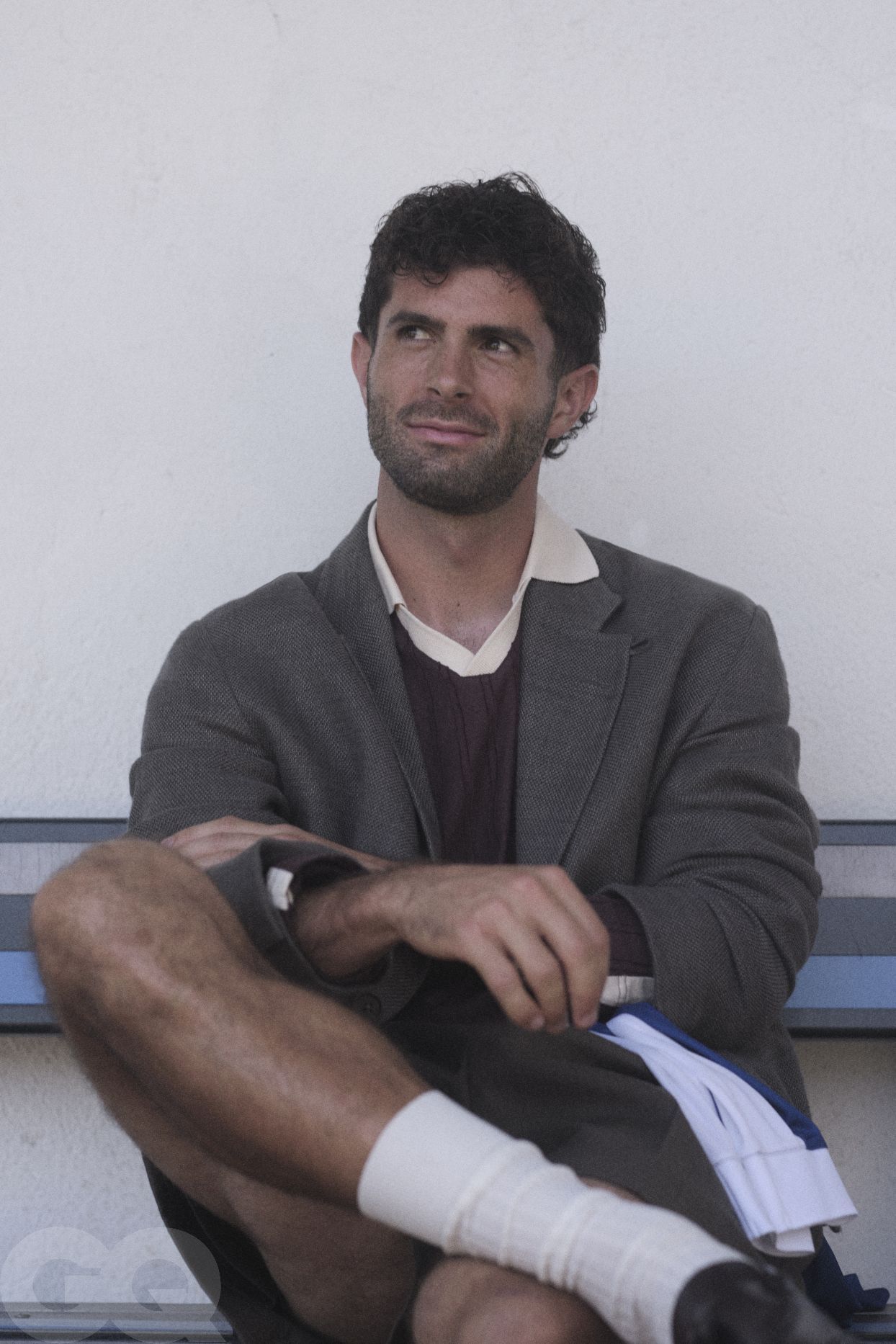
His public-facing persona has evolved alongside his game. The GQ profile treatment – the magazine cover adjacency, the athlete-as-style-figure positioning – reflects a moment when Pulisic is being asked to exist in multiple registers at once. Soccer player, national symbol, marketable face. He handles that multiplicity without visible strain, which is itself a kind of skill. Some athletes buckle under the lifestyle-brand layer; others use it to construct an armor that eventually disconnects them from what made them interesting. Pulisic seems to wear it lightly, like something he picked up and tried on without committing to it as identity.
The “just another big tournament” line is worth sitting with. It could read as dismissiveness, the athlete’s reflexive deflection from a question that feels too large. But in context it sounds more like a genuine cognitive strategy – a way of scaling the moment down to something manageable without lying about its significance. You play the game, not the occasion. Every coach says this. Few players actually believe it at the cellular level. Pulisic might.
American athletes from other sports have long understood how to dress the role – how the visual language of confidence, of ease, of not trying too hard, communicates something that performance alone cannot. Soccer has been slower to develop that grammar in the United States, partly because the sport’s cultural infrastructure here is still relatively young, partly because its biggest stars have historically been European or South American. Pulisic is the first American men’s player in a generation who seems to understand that the off-pitch image and the on-pitch performance are not separate projects. They inform each other. The same instinct driving the current appetite for worn-in, low-key aesthetic codes – the idea that the quietest thing in the room often commands the most attention – is visible in how he presents himself.
A Home Tournament, an Honest Assessment
The US men’s national team cohosts the biggest tournament in global sport, and its star player has just navigated the hardest stretch of his career. That is not a disaster narrative. It is, if anything, a more interesting arc than straightforward ascent – the athlete who went through something and came out the other side without needing to announce the journey.

Pulisic will take the field in front of home crowds that will be larger and louder than anything the American program has staged before. He has said the right thing about it, which is that it is just another tournament. The question sitting underneath that calm, the one that the next eighteen months will answer slowly and then all at once, is whether “just another tournament” is what it will feel like when the noise gets loud and the knockout stages arrive and the whole country is watching – and whether that version of composure holds.